Jefferson Park
via the Whitewater Trail
Hike details:
Mileage: 10.5 miles round trip w/ 2,000 ft. elevation gain (to Scout Lake & Bays Lake)
12.5 miles round trip w/ 2,150 ft. elevation gain (to Russell Lake)
Approximate hike time: 4 hours 43 minutes w/ an average pace of 2.3 mph (to Scout Lake)
5 hours 26 minutes w/ an average pace of 2.3 mph (to Russell Lake)
Difficulty: Difficult
Trail usage: High in late July, August and early September. Low foot traffic mid-September until the snow falls (usually late October/early November).
Highest elevation: 5,841 ft. Lowest elevation: 4,114 ft.
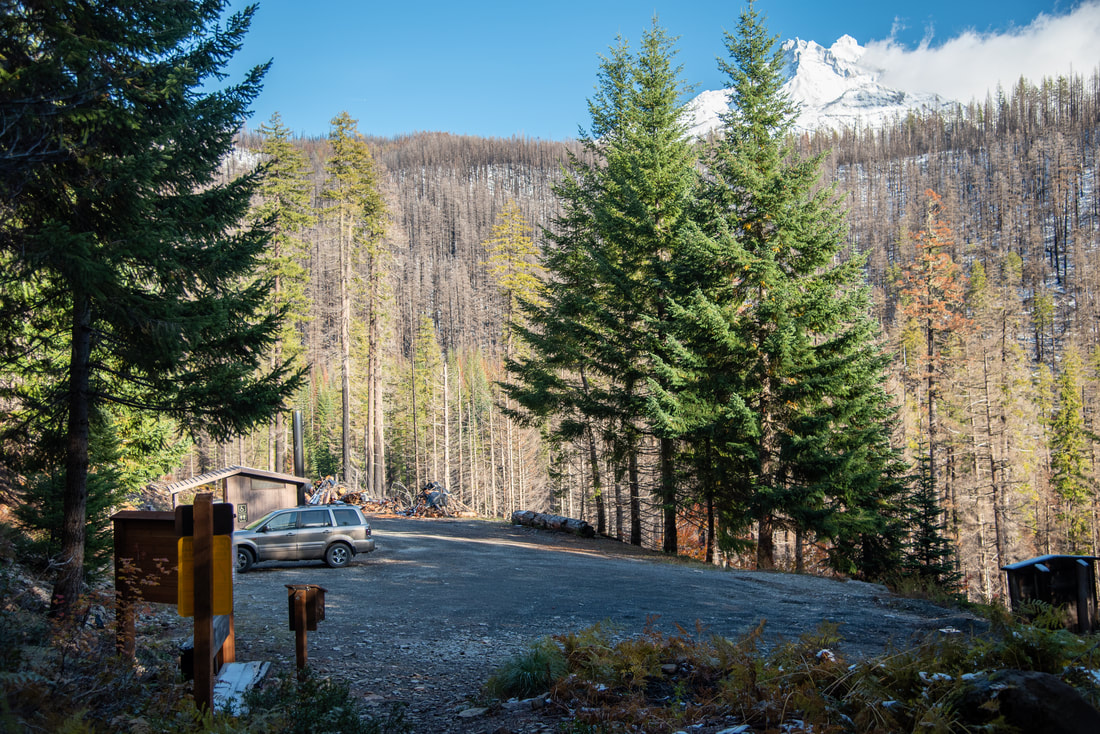
General location: 70 miles east of Salem - Mount Jefferson Wilderness - Willamette National Forest
Accessible: July to mid-November
(Best time to go is early to mid-August for prime wildflowers and October for fall colors).
Permits required: Central Cascades Wilderness Permit for day hikes & overnight (June 15 - October 15). Outside of those dates you will need a free self issue wilderness permit & Northwest Forest Pass for parking.
Pit toilet at trailhead: Yes
Trail allows: Dogs, horses, camping
Possible dangers: Trail has some steep drop offs with loose rock. Tree fall during high winds is also a danger here due to wildfire damage.
12.5 miles round trip w/ 2,150 ft. elevation gain (to Russell Lake)
Approximate hike time: 4 hours 43 minutes w/ an average pace of 2.3 mph (to Scout Lake)
5 hours 26 minutes w/ an average pace of 2.3 mph (to Russell Lake)
Difficulty: Difficult
Trail usage: High in late July, August and early September. Low foot traffic mid-September until the snow falls (usually late October/early November).
Highest elevation: 5,841 ft. Lowest elevation: 4,114 ft.
General location: 70 miles east of Salem - Mount Jefferson Wilderness - Willamette National Forest
Accessible: July to mid-November
(Best time to go is early to mid-August for prime wildflowers and October for fall colors).
Permits required: Central Cascades Wilderness Permit for day hikes & overnight (June 15 - October 15). Outside of those dates you will need a free self issue wilderness permit & Northwest Forest Pass for parking.
Pit toilet at trailhead: Yes
Trail allows: Dogs, horses, camping
Possible dangers: Trail has some steep drop offs with loose rock. Tree fall during high winds is also a danger here due to wildfire damage.
Description:
Jefferson Park is one of the most popular and sought after summer destinations for hikers and backpackers from all over the Pacific Northwest, and for good reason. There are multiple ways to enter Jefferson Park, either from the Whitewater Creek Trail, the South Breitenbush Trail, or from farther south on the Pacific Crest Trail via Woodpecker Ridge, all of which were badly burned in the 2020 Lionshead fire, but somehow Jefferson Park was left unscorched. Because Jefferson Park is so popular, only 30 day use permits and 8 overnight Limited Entry Permits are issued per day from the Whitewater Trailhead, which helps limit the number of people who enter this beautiful area. Consider yourself very lucky if you are able to snag one of these permits, because the season to get up to these lakes is short (only about 3.5 months). Because of its popularity, you will see rangers here checking permits and making sure that campers are adhering to the Leave No Trace Principles.
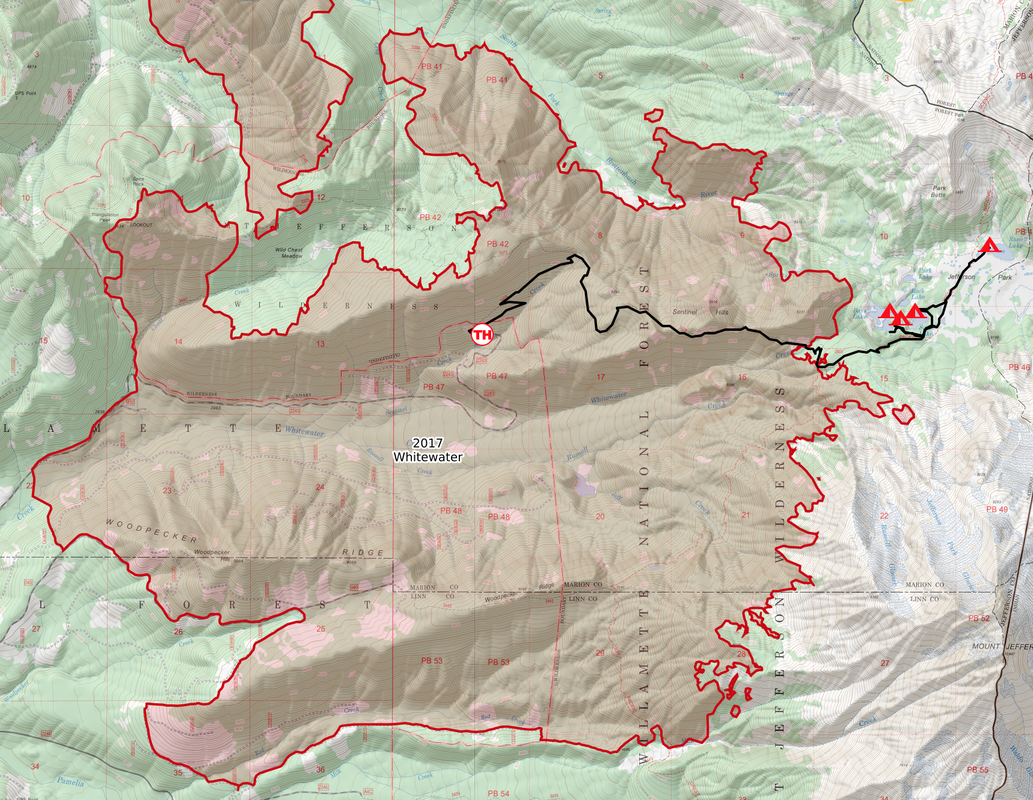
In 2017 the Whitewater Fire was started by lightning and it devastated this area, as it burned a total of about 14,463 acres. The Whitewater Trail was closed for 2 years and reopened in August 2019. Unfortunately in September 2020 the Lionshead Fire ripped through this area, burning 204,469 acres of pristine forest and wilderness, closing Jefferson Park once again for a few years.
|
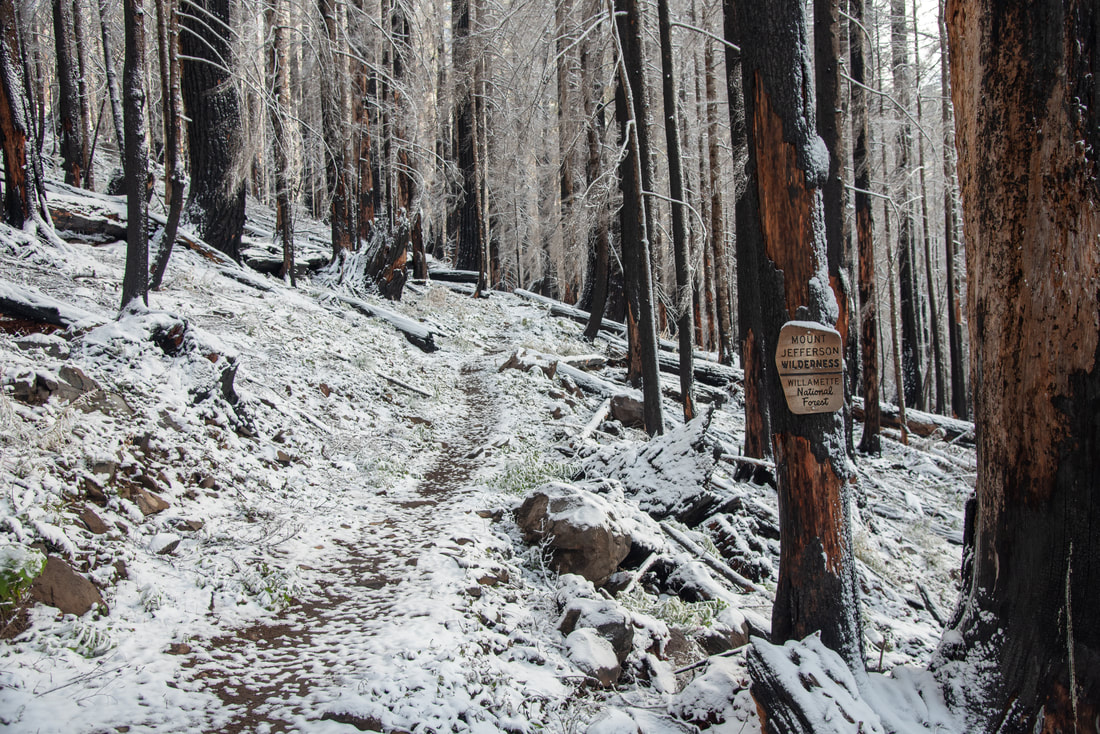
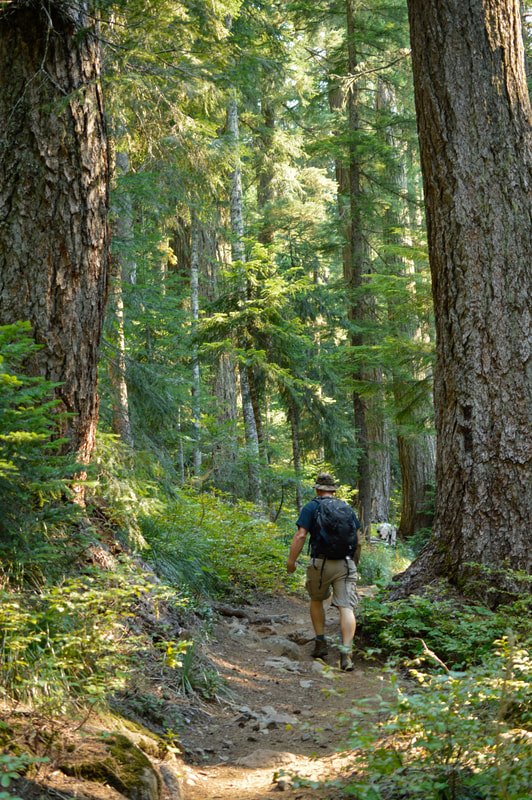
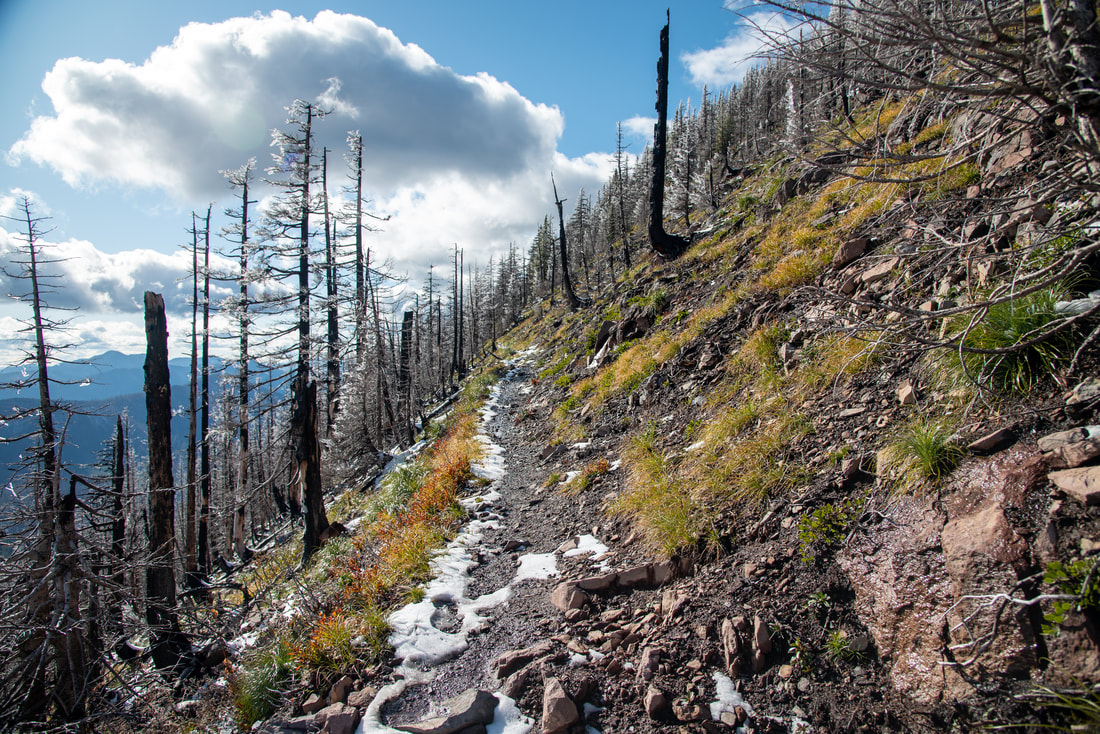
The first 1.5 miles are fairly steep switchbacks, climbing about 850 feet up to the Sentinel Hills Ridge. The trail up to the ridge has lots of loose rocks and exposed roots especially after the fires, and you will definitely have to watch where you are stepping. It helps to have trekking poles. Once you have climbed to the ridge, you will see breathtakingly close-up views of Mount Jefferson, which is Oregon's second tallest mountain, standing at 10,495 ft. tall.
|
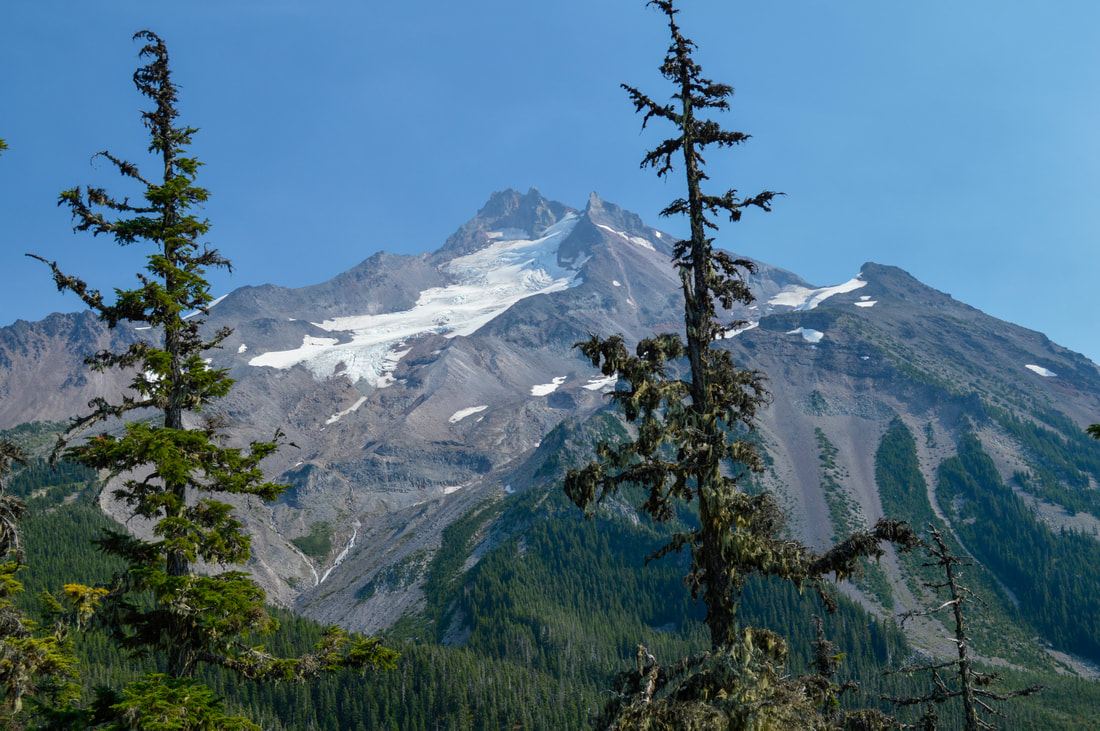
(pre Whitewater Fire)
|
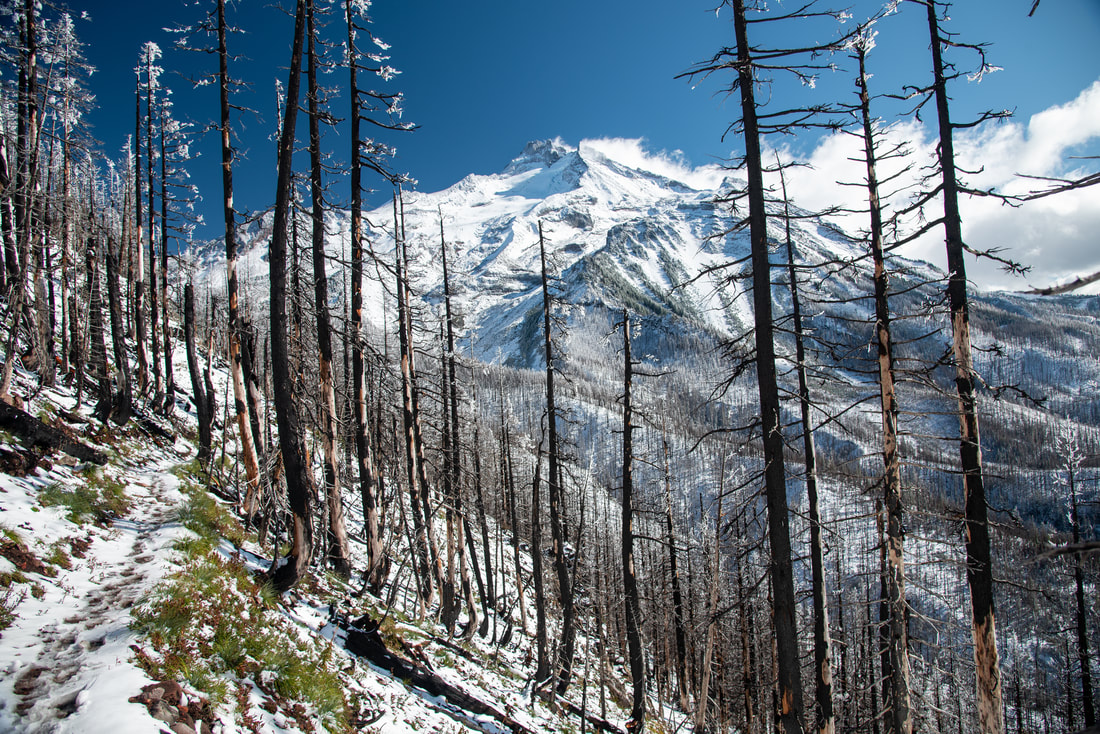
(after Whitewater Fire)
|
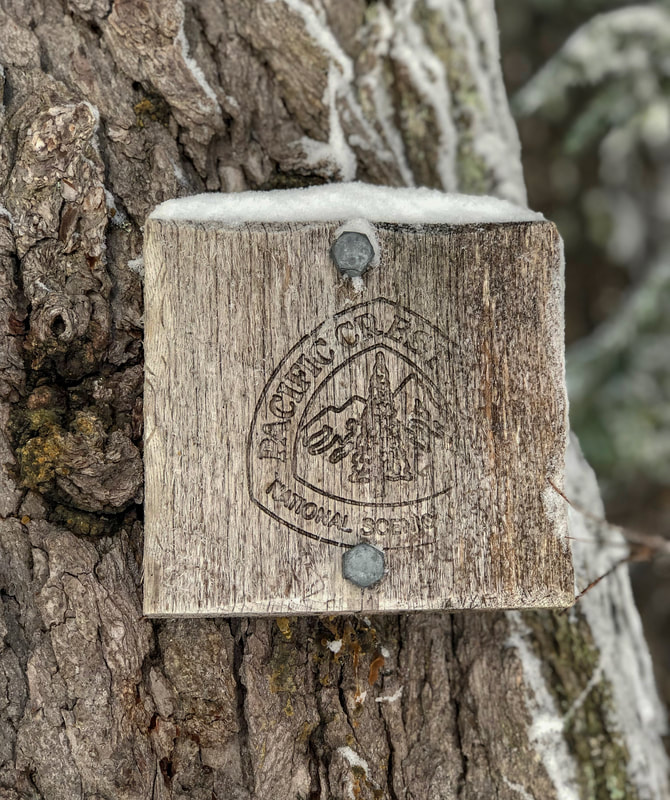
This ridge section of the hike is 2.7 miles long and you continue to climb another 500 feet in elevation. The trail here is very narrow and the hillside is a bit crumbly from the fire damage, so be careful when passing people on the trail. After the 2.7 miles along the ridge, you will need to cross Whitewater Creek. Before the fire there used to be a bridge across the creek, now you will need to rock hop, which can prove challenging early in the season when there is significant snowmelt, but the crossing should be no problem by the end of July. Shortly after crossing Whitewater Creek, you will come to a junction with the Pacific Crest Trail.
|
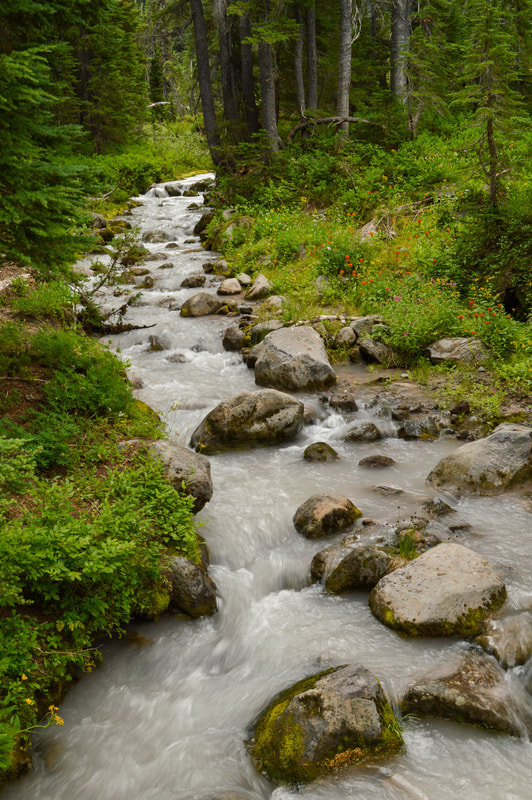
(Milk Creek)
|
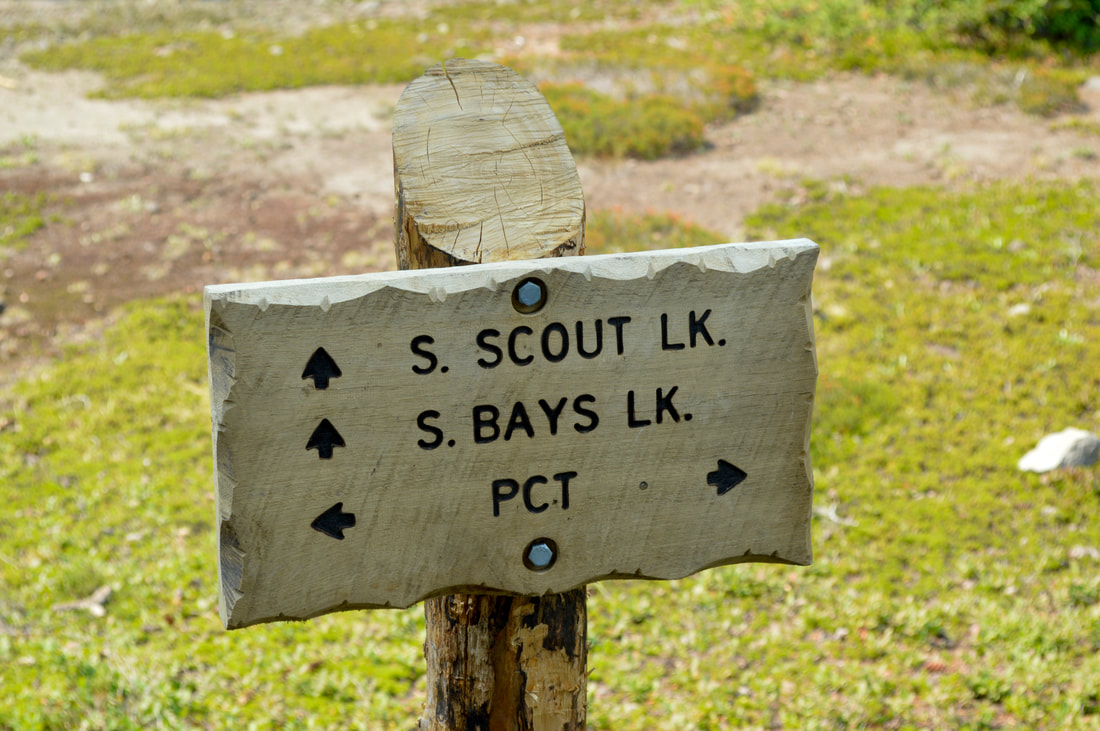
To see the amazing lakes at Jefferson Park, you will go northbound (left) onto the Pacific Crest Trail. 0.4 miles after the junction you will cross Whitewater Creek on a cute little bridge. This creek is almost milky white with glacial silt, which is how it got its name. After the creek crossing it is only another 0.5 miles to a trail junction, where a trail heading off to the left leads to the south end of Scout and Bays Lakes and the campsites that are there.
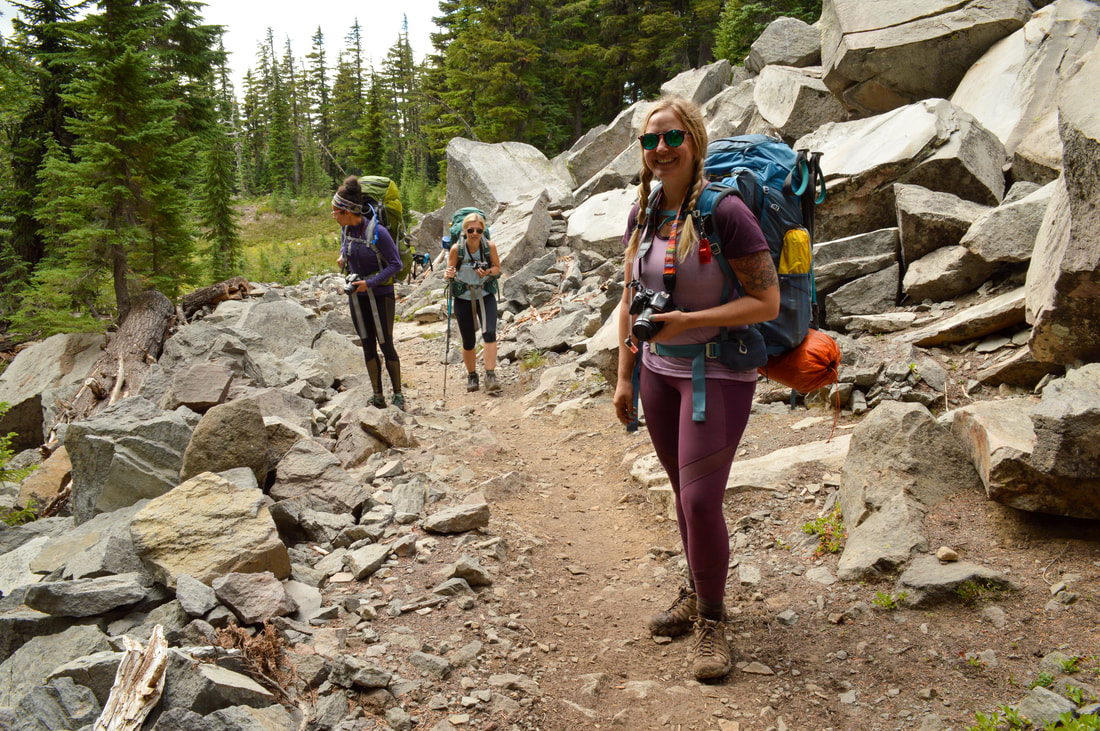
(Russel Lake)
|
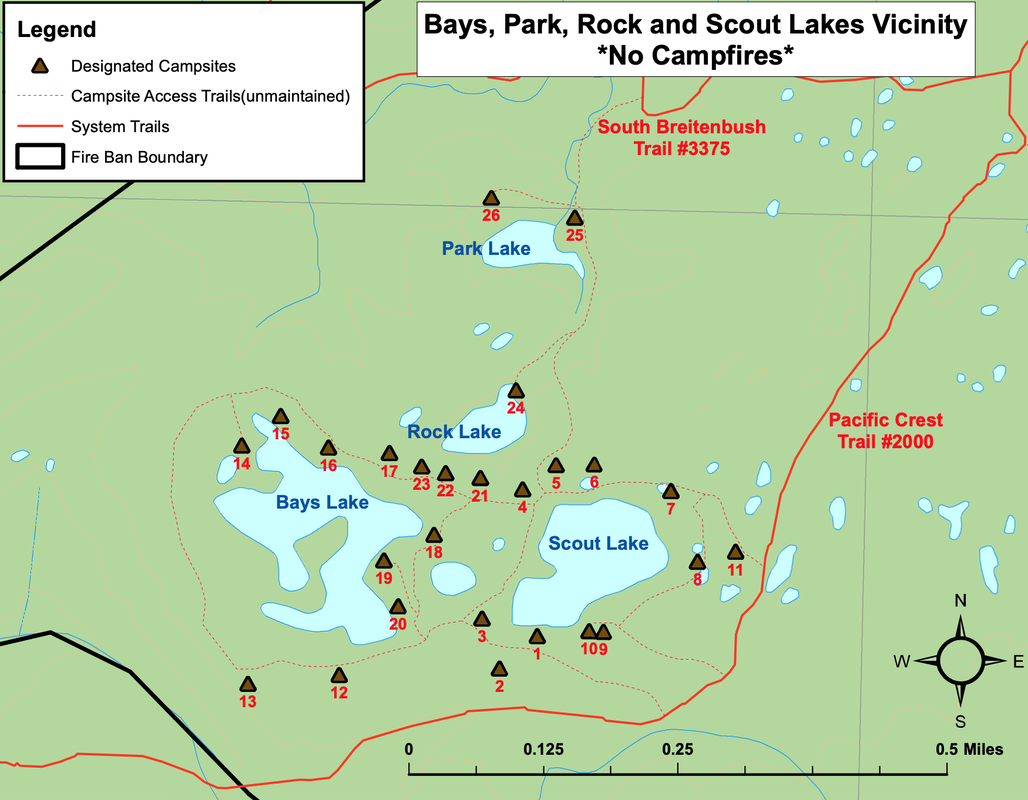
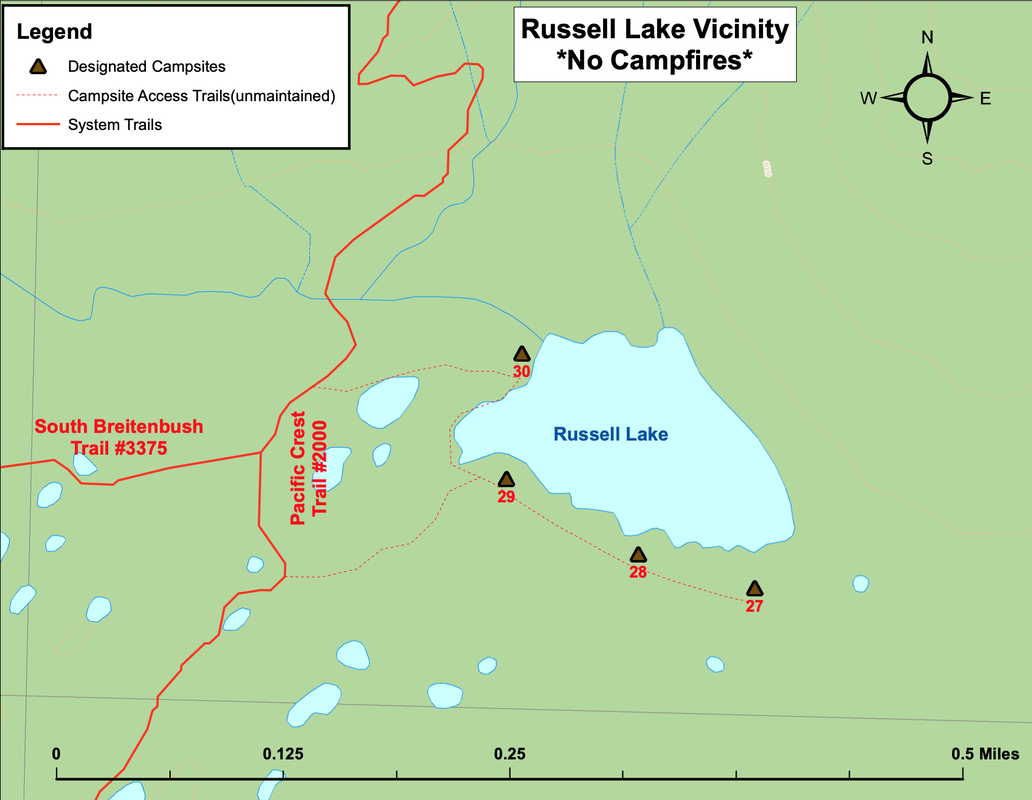
Within the Jefferson Park boundary there are a total of 30 designated campsites and if you are camping within the boundary you must camp at one of these designated sites. They are marked on the map posted at the park boundary, and each site is then marked with a post that has a number on it. The campsites on the south side of Scout and Bays Lakes are further away from the lakes than all of the other sites and require quite a bit of walking to go get water for filtering.
|
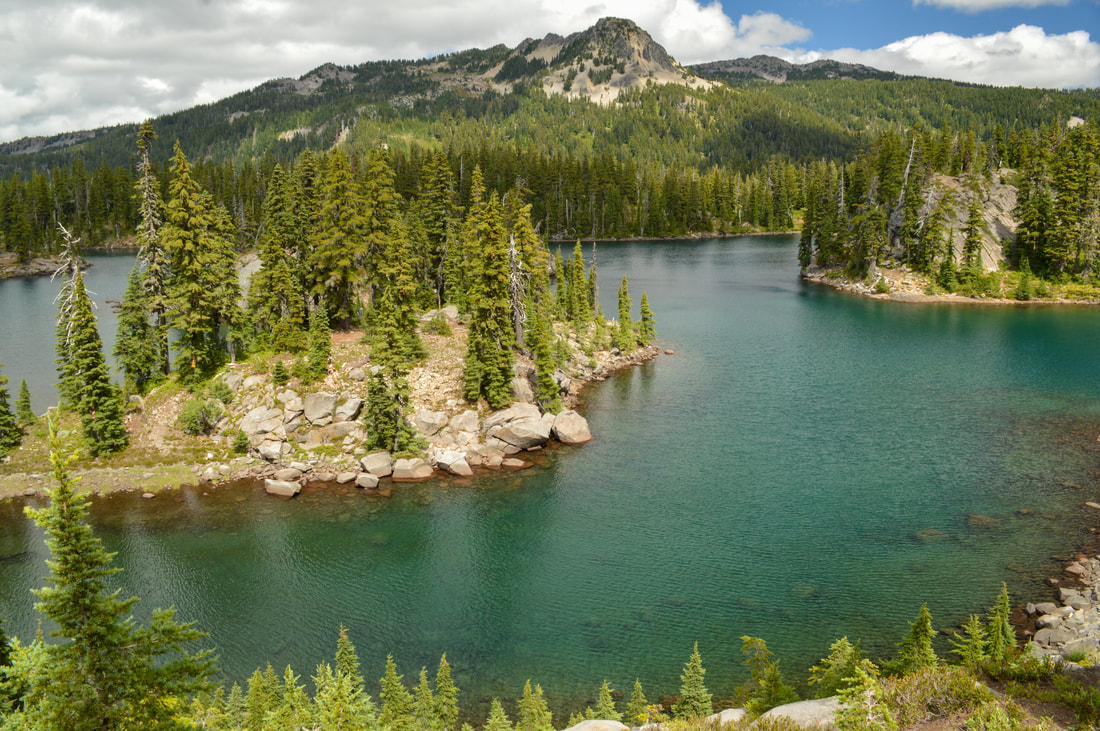
(Bays Lake and Park Butte)
|
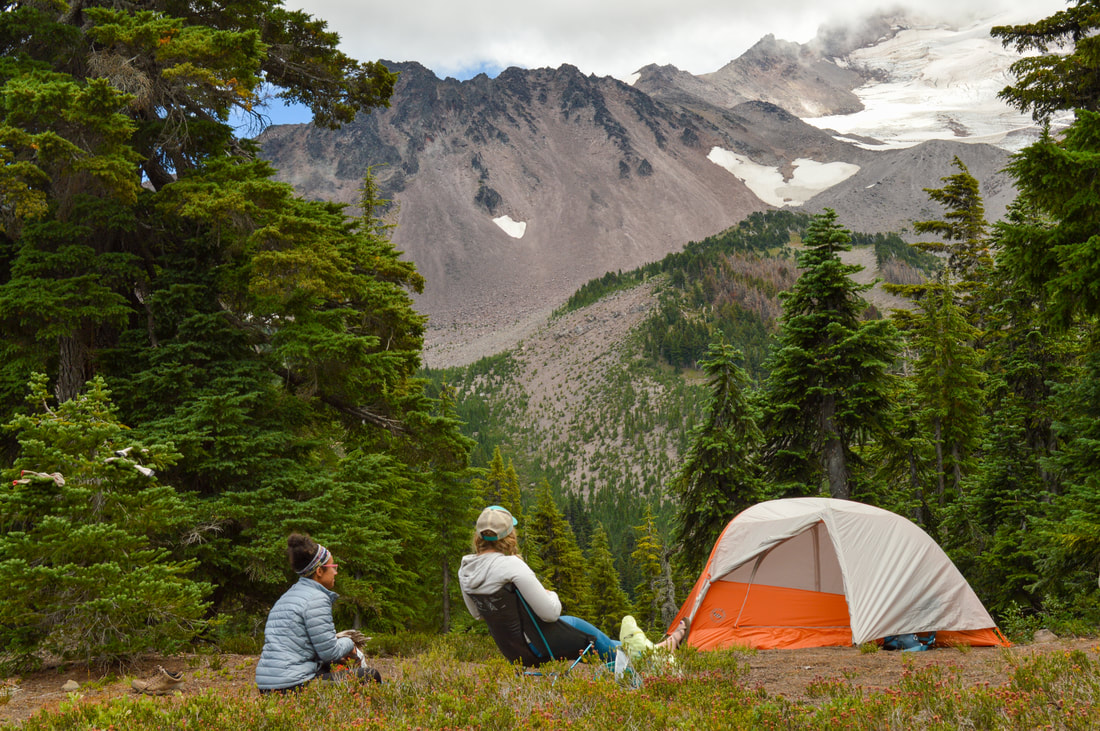
(campsite #13)
|
Continue up the PCT another 0.25 miles and come to where another trail splits off to the left. This is where you can get to the north side of Scout and Bays Lakes and this is where you will find the 10 best campsites because you have views of the lakes and Mount Jefferson. There is also the much smaller Rock Lake, which has one campsite and Park Lake which has two campsites. Scout Lake has a maximum depth of 31 feet and within its blue-green waters you can find brook trout, and Bays Lake is 20 feet deep and has a really cool peninsula in the middle. In these turquoise waters you will also find good size brook trout. All of the lakes here have rocky shorelines, which makes for easy casting if you’re fishing and very easy access for swimming during the hot summer months.
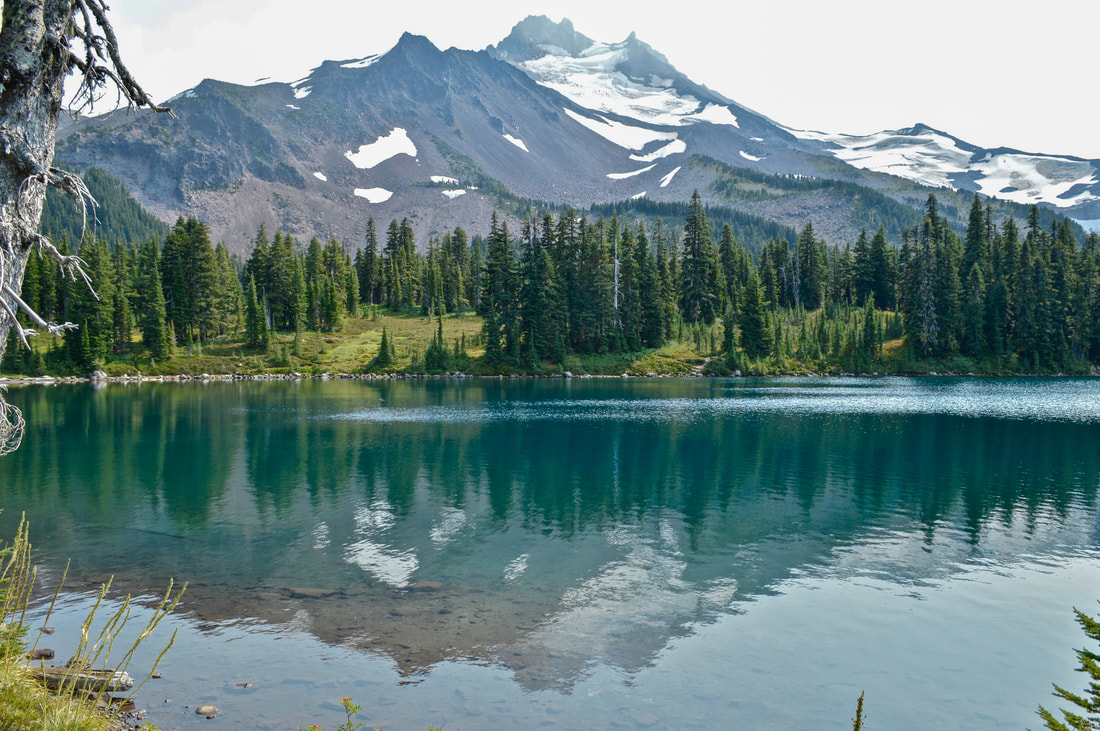
(Scout Lake in early September 2014)
|
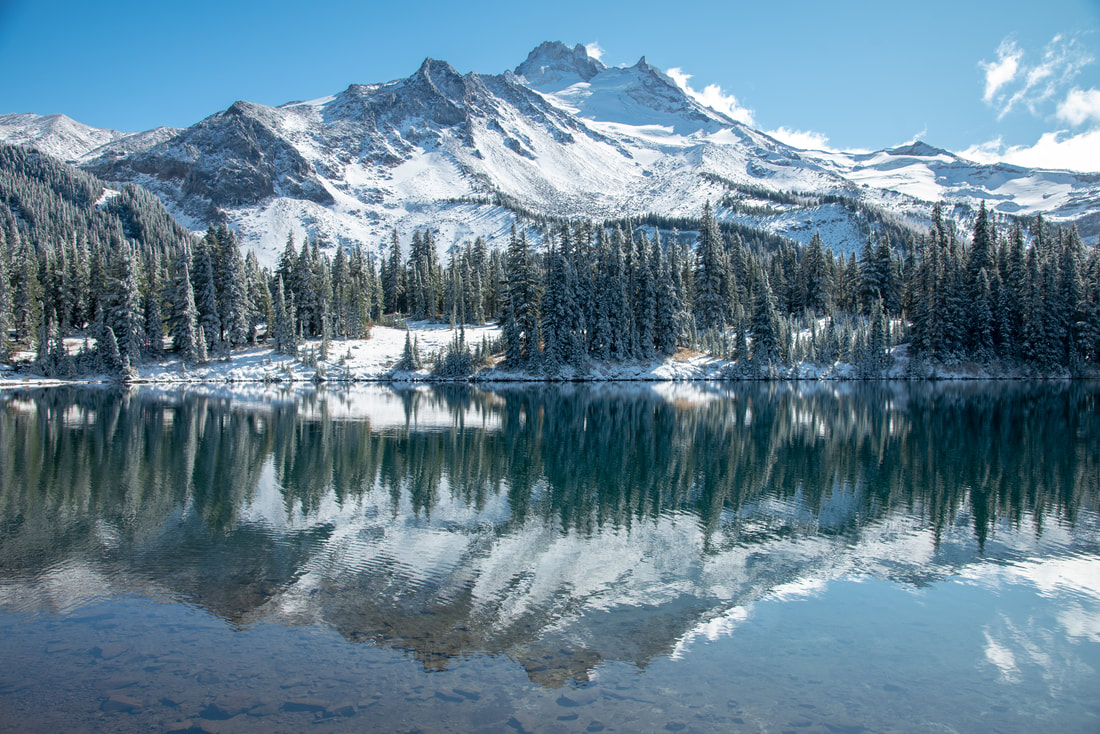
(Scout Lake in October 2019)
|
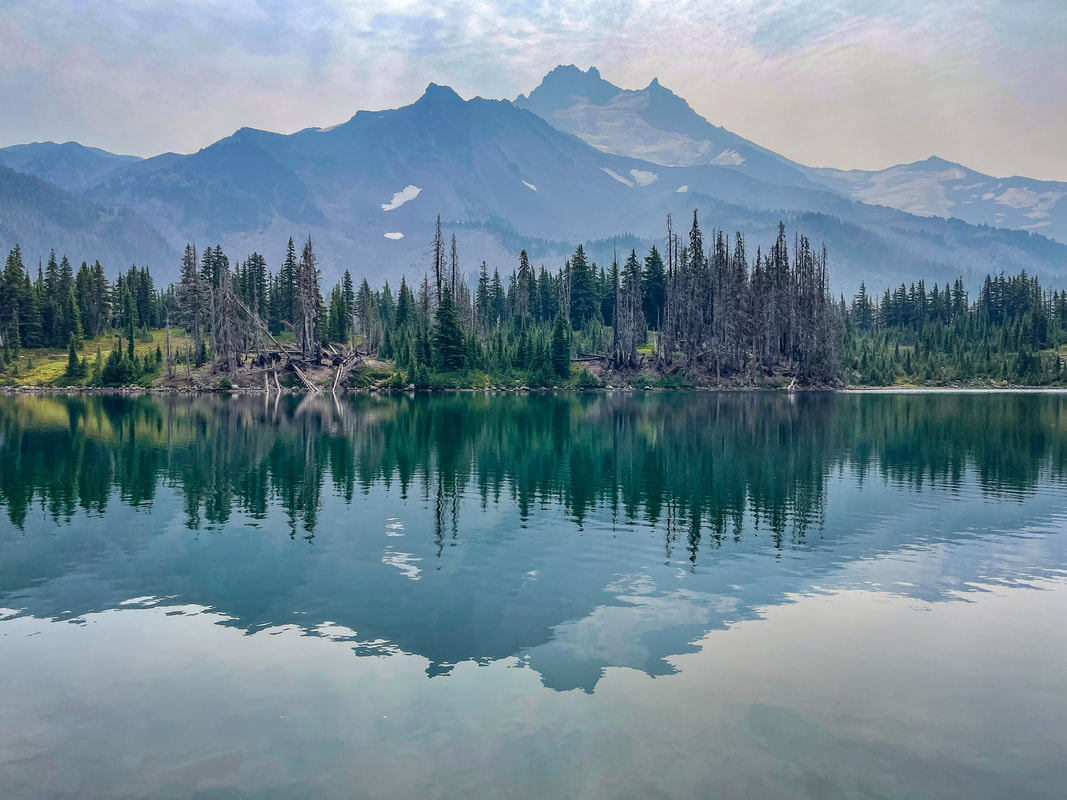
(Scout Lake after the Lionshead Fire - September 2022)
Scout Lake was named by Boy Scout Troop #20 out of Albany in August 1931. They spent multiple days camped by the lake and before they left, they marked 'Scout Lake' with a pencil onto a wooden pointer along the Skyline Trail (which is now known as the Pacific Crest Trail). On a trip a few years later, they found that the words they had written in pencil were no longer readable, so Scout Lake was carved into the wooden marker. From Scout Lake it is another mile north on the PCT to Russell Lake.
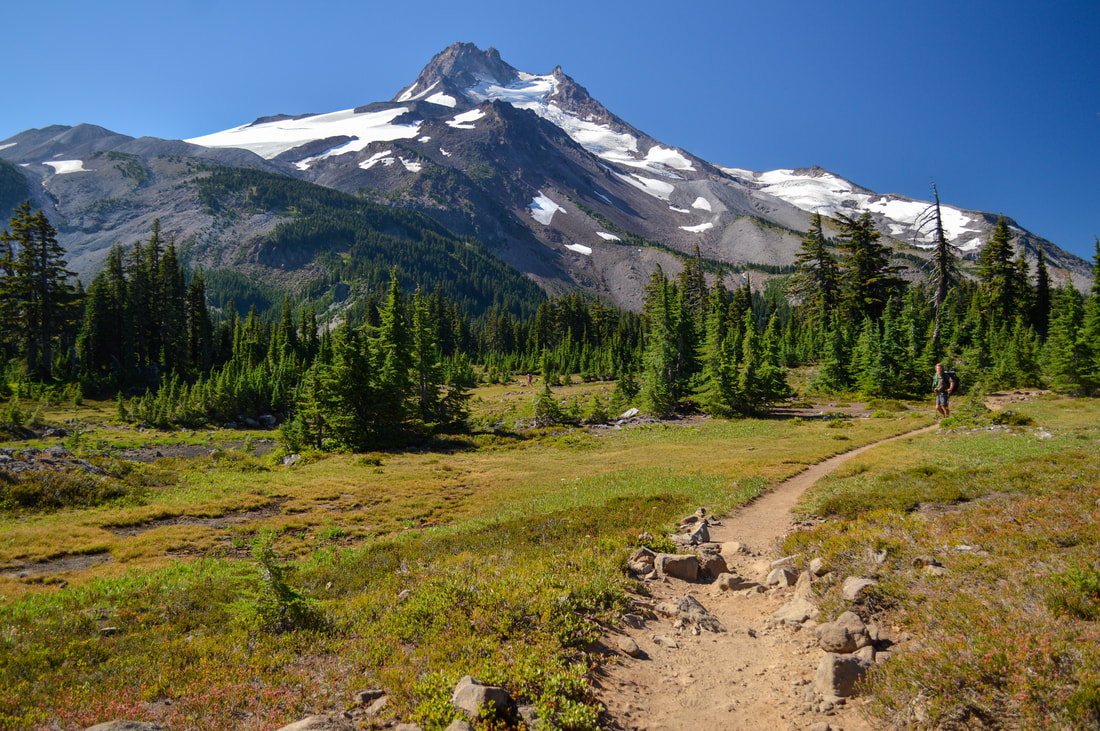
Russell lake is gorgeous, and gives you a different view of Mount Jefferson than the other lakes do. It is a bit more shallow along the shoreline, but has a maximum depth of 27 feet. There is a beautiful grassy area to sit by and hang out, perfect for a lunch break before turning around and heading back to the trailhead. At Russell Lake you will find cutthroat trout and a total of 4 campsites. If you are backpacking, this lake is the perfect place to watch the sun set and the moon rise over the mountain, and site #30 is prime real estate.
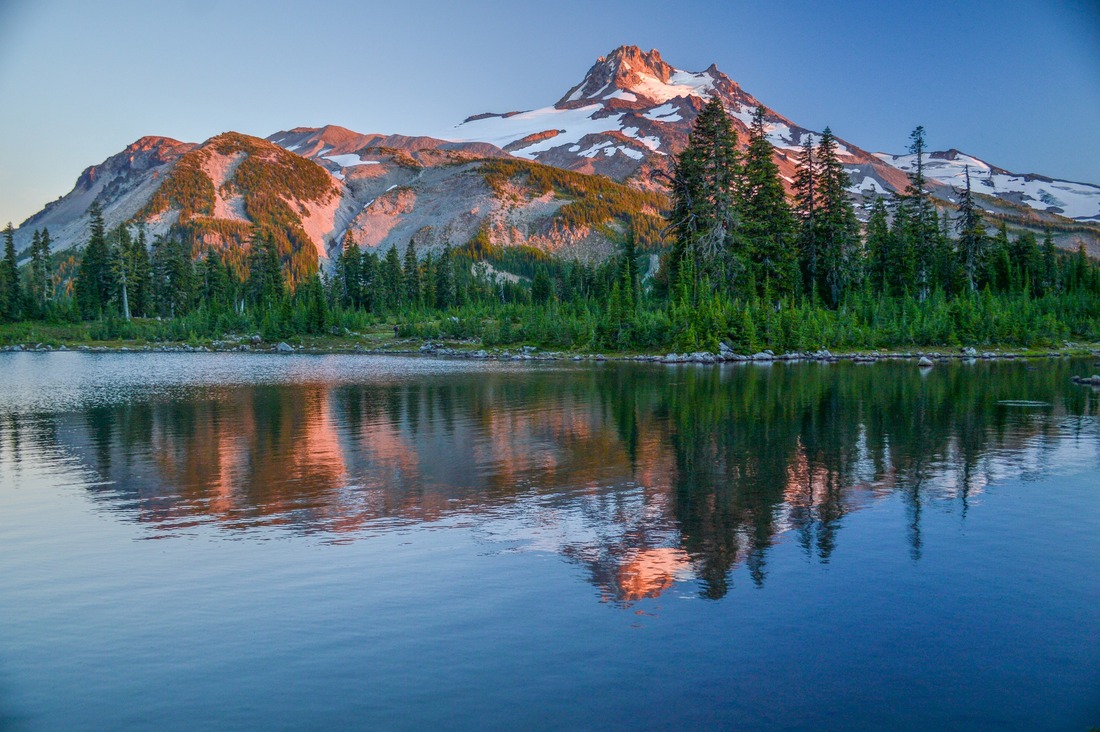
(Russell Lake)
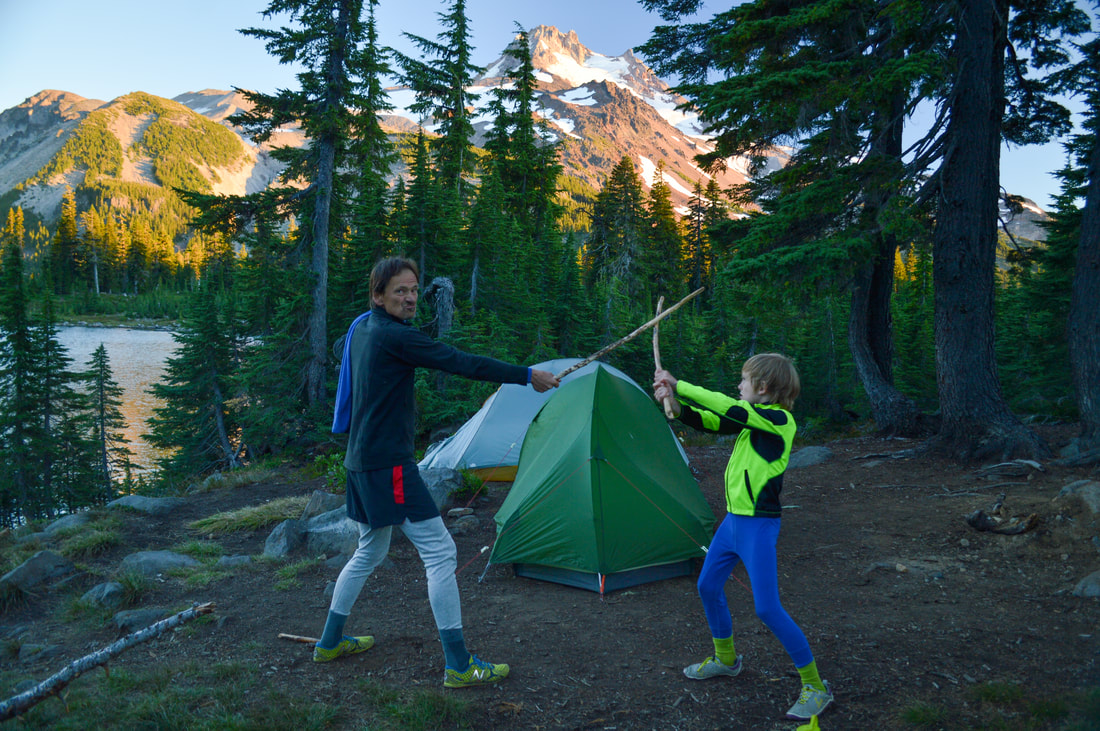
(campsite #30)
The time to visit these spectacular lakes is limited by how long the snow lingers in the summer and how soon the snow falls in autumn. If you want to view the many wildflowers that grow in the alpine meadows between the lakes, come in late July or early August. If you are looking for some crisp mountain air and some beautiful fall colors, come in mid to late September or even early October.
Jefferson Park is an amazing place to come for a day hike and an even more amazing place to spend the night if you can snag one of the 8 limited permits per night. This hike is definitely one of the top 3 Oregon hikes! The hike is rated as difficult not only because of the mileage and elevation gain, but also because of the tread of the trail and the steep drop offs along certain sections of trail can be quite dangerous. Because the majority of the trail travels through a burn scar, most of the hike is sun-exposed and it can get very hot during the summer months. Bring a hat, sunscreen and plenty of water and electrolytes! |
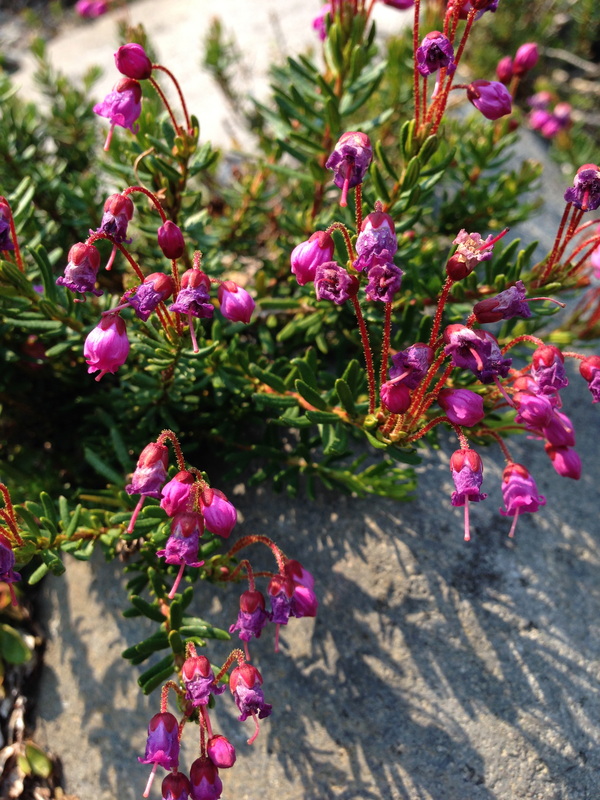
(flowering heather in mid-September)
|
Directions:
From Salem
- Drive on OR-22 E for 61.4 miles. Between mileposts 60 and 61 turn left onto Whitewater Creek Rd./NF-2243. Follow this road 7.4 miles, where it ends at a large parking area. (Total of 70 miles)
- Drive US-20 W to the Santiam junction and stay right to merge onto OR-22. Between mileposts 61 and 60 turn right onto Whitewater Creek Rd. 2243. Follow this road 7.4 miles, where it ends at a large parking area. (Total of 77.7 miles)
- Drive on OR-126 E for 68.2 miles and then make a slight right onto US-20 E for 3.1 miles. Turn left onto OR-22 W for 20.9 miles. Between mileposts 60 and 61 turn right onto Whitewater Creek Rd./NF-2243. Follow this road 7.4 miles, where it ends at a large parking area. (Total of 109 miles)
- It is a total of 116 miles via Salem.
- It is a total of 249 via Bend.
-This trail write-up was last updated September 2022-
*All pictures are taken by Franziska Weinheimer
*All pictures are taken by Franziska Weinheimer
*Disclaimer: The trail descriptions, mileage, GPS tracks and difficulty ratings depicted on this website are never 100% accurate. Always hike at your own risk, using your own knowledge, equipment and common sense. Franziska Weinheimer/Hike Oregon are not responsible if you or anyone in your party gets injured or lost while attempting one of these or any other hikes.